Understanding the Big Beautiful Bill: No Tax on Tips, Overtime & Senior Benefits
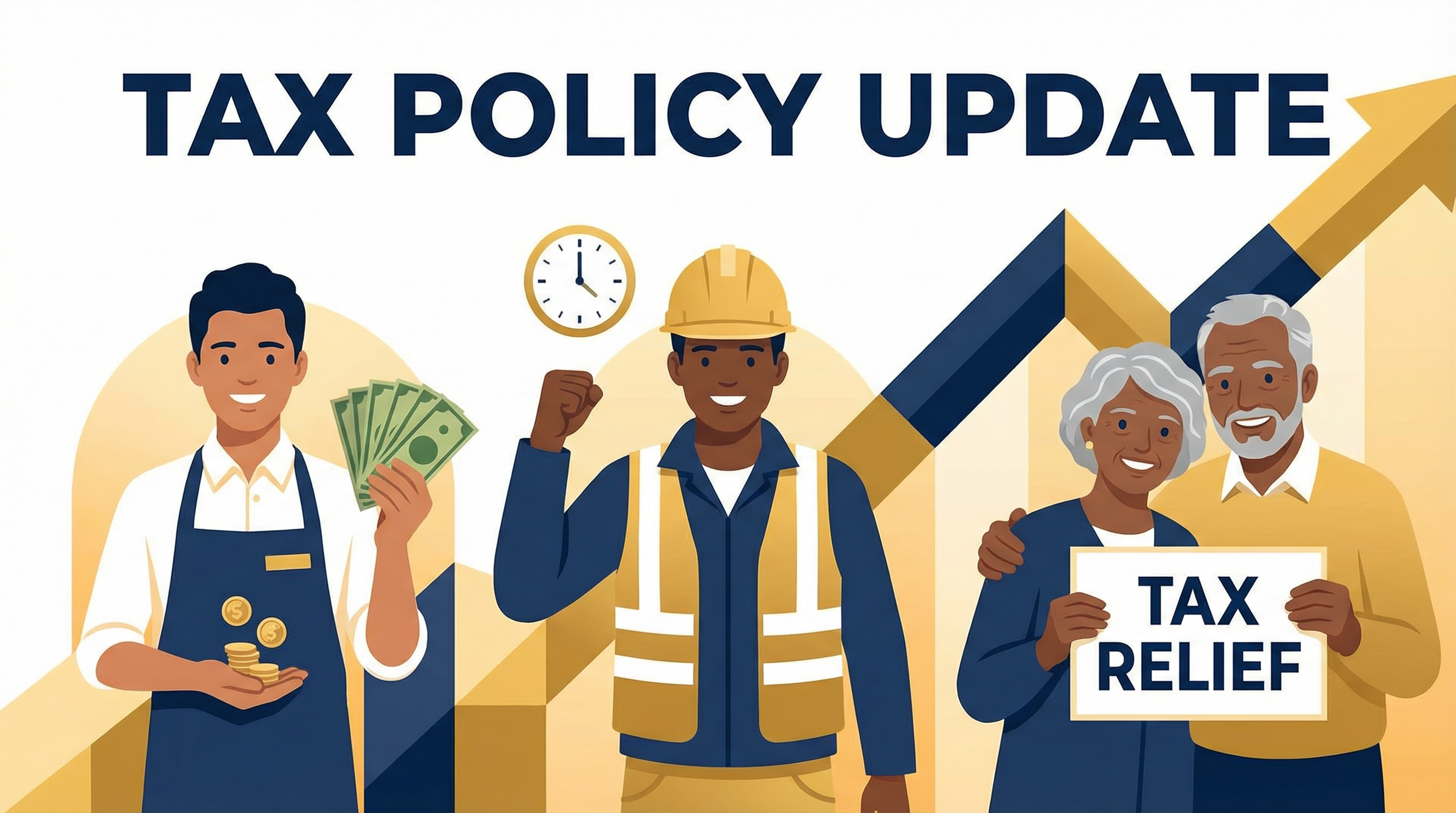
The proposed "Big Beautiful Bill" represents one of the most significant tax policy shifts in recent years, promising to put more money directly into the pockets of American workers and retirees. Here's everything you need to know about how this legislation could impact your finances.
No Tax on Tips: A Game-Changer for Service Workers
For millions of Americans working in the service industry—from restaurant servers to hairstylists to delivery drivers—tips represent a substantial portion of their income. Under current tax law, all tip income must be reported and is subject to federal income tax. The proposed legislation would eliminate federal income taxes on tip income entirely.
Who benefits most? Workers in hospitality, food service, personal care, and delivery services stand to gain the most. For a server earning $30,000 annually with $15,000 coming from tips, this could mean saving $1,500 to $3,000 per year in federal taxes, depending on their tax bracket.
Important considerations: While federal income tax would be eliminated on tips, Social Security and Medicare taxes (FICA) would likely still apply. Additionally, proper documentation and reporting of tip income remains essential for Social Security benefit calculations in retirement.
Overtime Pay Tax Exemption: Rewarding Hard Work
The second major component of the bill proposes eliminating federal income tax on overtime pay. This provision recognizes that workers putting in extra hours—often sacrificing personal time and family commitments—deserve to keep more of what they earn.
The potential impact: For hourly workers who regularly work overtime, this could represent substantial savings. Consider a construction worker earning $25 per hour who works 10 hours of overtime weekly. At time-and-a-half, that's $375 in weekly overtime pay, or roughly $19,500 annually. Eliminating federal income tax on this amount could save $2,000 to $4,000 per year.
Industries most affected: Manufacturing, construction, healthcare, transportation, and logistics sectors—where overtime is common—would see the greatest benefit. This provision could also incentivize employers to offer more overtime opportunities rather than hiring additional staff.
Expanded Senior Benefits: Supporting Retirement Security
The third pillar of the legislation focuses on enhancing financial security for America's seniors through expanded tax benefits. While specific details continue to evolve, proposed measures include increasing the standard deduction for seniors, expanding tax credits for elderly care expenses, and potentially reducing or eliminating taxes on Social Security benefits for middle-income retirees.
Social Security taxation relief: Currently, up to 85% of Social Security benefits can be taxable for individuals with combined income above $34,000 (or $44,000 for couples). The proposed changes could raise these thresholds significantly or eliminate taxation entirely for many retirees.
Medical expense deductions: Enhanced deductions for medical expenses, long-term care insurance premiums, and prescription drug costs could provide substantial relief for seniors facing rising healthcare costs.
What This Means for Your 2025 Tax Planning
While the Big Beautiful Bill continues to move through the legislative process, it's important to understand that these provisions are not yet law. However, if passed, they could take effect as early as the 2025 tax year, meaning changes could impact your 2025 tax return filed in 2026.
Action steps to consider:
- •Service workers: Continue documenting all tip income accurately, even if it becomes tax-exempt, as this affects Social Security benefits.
- •Overtime workers: Track overtime hours separately from regular hours to maximize potential tax benefits.
- •Seniors: Review your income sources and consider how changes to Social Security taxation could affect your overall tax strategy.
- •Everyone: Consult with a qualified tax professional to understand how these potential changes could impact your specific situation.
The Bigger Picture: Economic Implications
Beyond individual benefits, the Big Beautiful Bill could have broader economic effects. Putting more money in workers' pockets could stimulate consumer spending and economic growth. However, questions remain about how the federal government would offset the reduced tax revenue—estimated at $150-200 billion annually—and what impact this might have on the federal deficit and national debt.
Some economists argue that increased consumer spending and economic activity could partially offset revenue losses through growth in other tax categories. Others express concern about long-term fiscal sustainability. As with any major tax policy change, the real-world effects will only become clear over time.